
Image taken from Pinterest
Close your eyes and think about a time from your childhood. For many people, memories bring them back to their childhood playtime and we often refer to it as the "good old times".
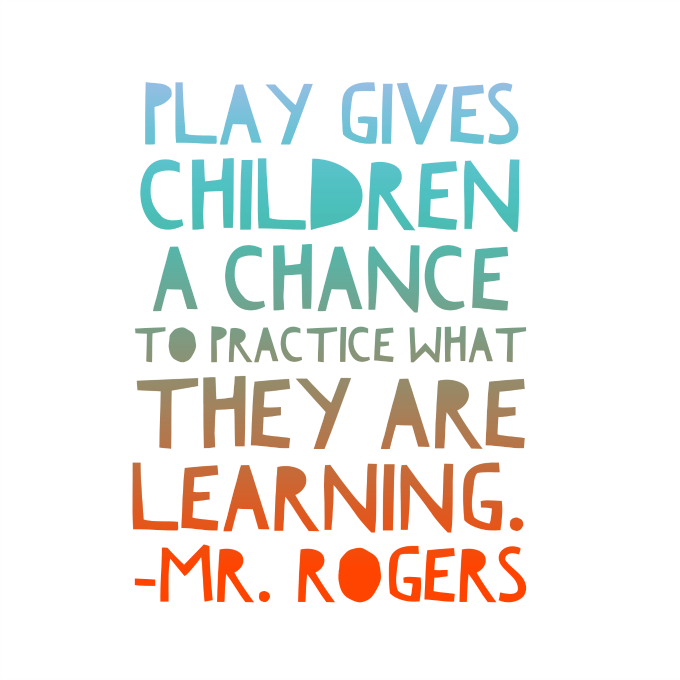
Living in an academic-driven society, playtime is often seen as a relief from formal learning and used as a form of "reward" for children. However, play is actually an important and essential part of every child's learning and development.
When playing independently, the child learns more about him/herself.
Self-directed play is process-oriented, which means it focuses on how a child explore the world through the manipulation of materials. We don't always have a definite answer on what the children will gain from their play experiences, and that's okay! Children are constantly in the process of learning about their emotions, their capabilities, and their interests. Self-directed play encourages the children to discover more about themselves and the world around them. This is unlike worksheets, which are goal-oriented. When children work on worksheets, they are working towards a "correct answer" and everything other than the "correct answer" is considered wrong. (However, worksheets are not evil! Do keep a lookout for a post about the appropriate use of worksheets in the near future.) Playtime creates endless opportunities for children to learn about the world without the fear of being wrong.
When playing in group, the child learns more about other people.
As children manipulate with open-ended materials, they discover many ways to solve problems and are introduced to different perspectives. Perspective-taking is a skill essential for social and cognitive development for children. In the process of playing, the children learn to follow rules and take instructions. When children are exposed to positive play experiences, you will find them eventually setting their own rules and taking instructions from one another to create a better play experience for everyone. In the process, children acquire life-long social skills such as turn-taking, sharing, compromising, and conflict-resolution.
Adults' Role in Children's Play
1. Give children space and time to take initiative and explore
In self-directed play, children don't always have answers to "What are you doing?" They may not know what they are doing at the moment, but it does not mean that they are not doing anything. Play is spontaneous and fun. It shifts the focus away from being "right". Is your child using a toy cashier as a phone? Is your child using a pebble as a comb? It doesn't matter, and that's the beauty of play and imagination! (That being said, you could model the functional way to use the materials, but don't force it upon them.) Let your child take control of his/her play and you'll be surprised to see what they come up with!
2. Be a play companion! Or just an observer
The word "self-directed" has been mentioned many times in this post. However, it doesn't mean that you are encouraged to leave your child alone during playtime. You can always play together with your child! Nothing engages your child more than knowing that you are having fun together with him/her. If not, you can always be an observer of your child's play. For children who are more reserved, they often look over to their caregiver before approaching unfamiliar objects or experiences. The presence of familiar adults within the child's play setting will provide him/her with a sense of reassurance and allow the child to explore comfortably.
3. Remember that play is not work
Albeit important and beneficial for children's learning and development, play is not work. Goal-oriented play with specific objectives to meet is not going to sustain your child's attention and interest for long. When children are interested and engaged in the play experience, they are intrinsically motivated to stay focused even when challenges arise.
At the end of the day, the most important thing we want is for all the children to be happy and play is the easiest, most natural form of happiness. Yes, even for adults! ☺
No comments:
Post a Comment